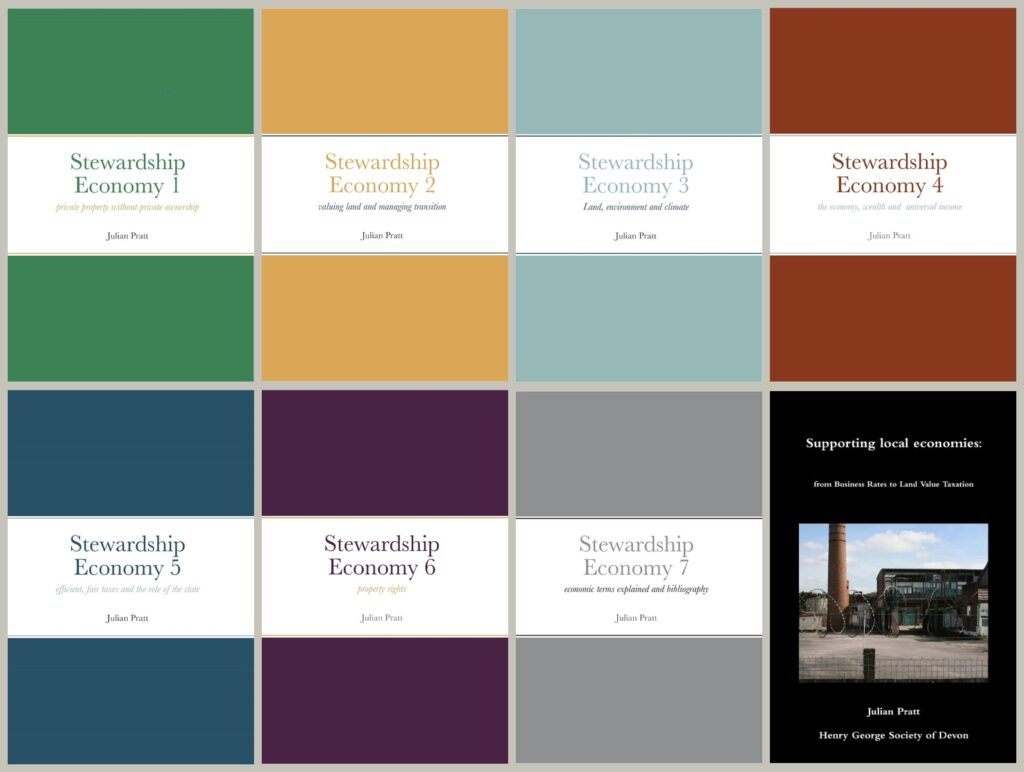
All available as paperbacks from Lulu using the hyperlinks below.
Kindle editions and free downloadable PDFs are at the end of the page.
Stewardship Economy 1: private property without private ownership is the first book and provides an overall summary of the main ideas.
.
Stewardship Economy 2: Valuing land and managing transition sets out in some detail how to establish the market rent of land and how to make the transition from an ownership to a stewardship economy. It also considers how the revenue from stewardship fees might be distributed.
.
Stewardship Economy 3: Land, environment and climate explores how a stewardship economy would transform the way we use land, provide housing and develop our cities. It goes on to consider how stewardship would help address pressing environmental and climate concerns.
.
Stewardship Economy 4: The economy, wealth and universal income focuses on the impact of stewardship on the national and global economy, how the distribution of wealth would be changed and the impact of a Universal Income
.
Stewardship Economy 5: efficient, fair taxes and the role of the state describes the some of the adverse effects of our current system of taxation and considers the role of the state in a stewardship economy. It also explains some basic economic principles and terms.
.
Stewardship Economy 6: property rights describes the systems of property rights in our current economic system, their history and how property rights could be more fair and efficient in a stewardship economy.
.
Stewardship Economy 7: some economics explained and bibliography. This book provides an introduction to some key economic concepts for the non-specialist and lists the references for all the books, as far as they are available
.
Julian Pratt authored a paper on the reform of business rates.
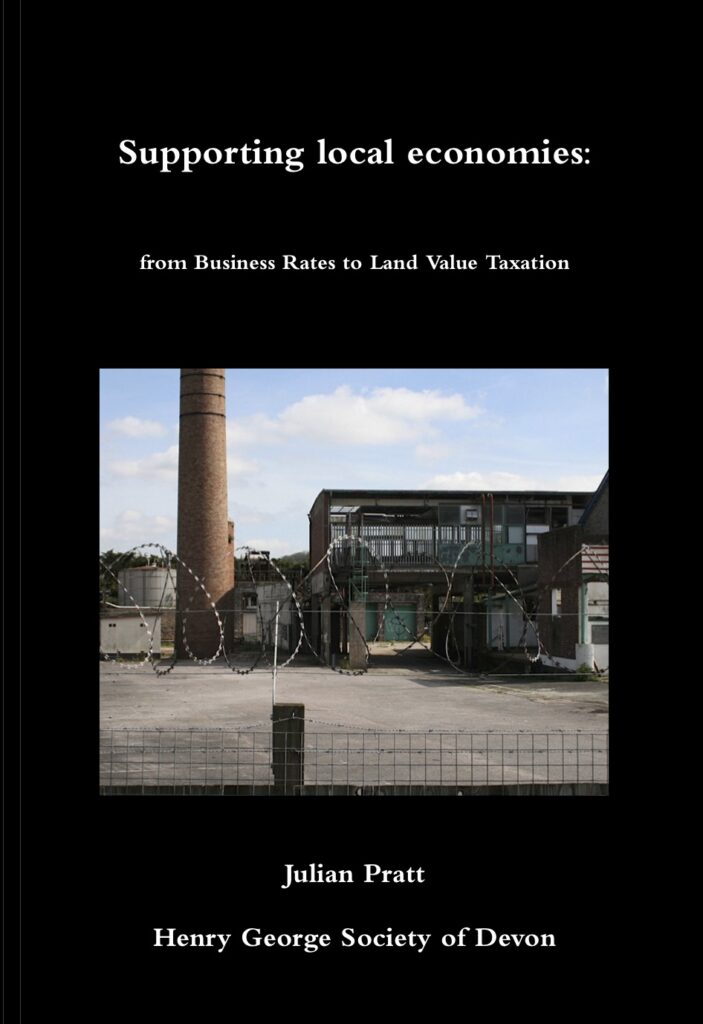
He also republished two papers by Thomas Paine that had influenced his thinking:
Agrarian Justice (written in 1797)
.
The Proposal that Louisiana be purchased (written in 1802)
.
.